SUSTAINABILITY
RELATED SERVICE – PROJECT DELIVERY
Industrial Solar PV to reduce grid dependence
The challenge
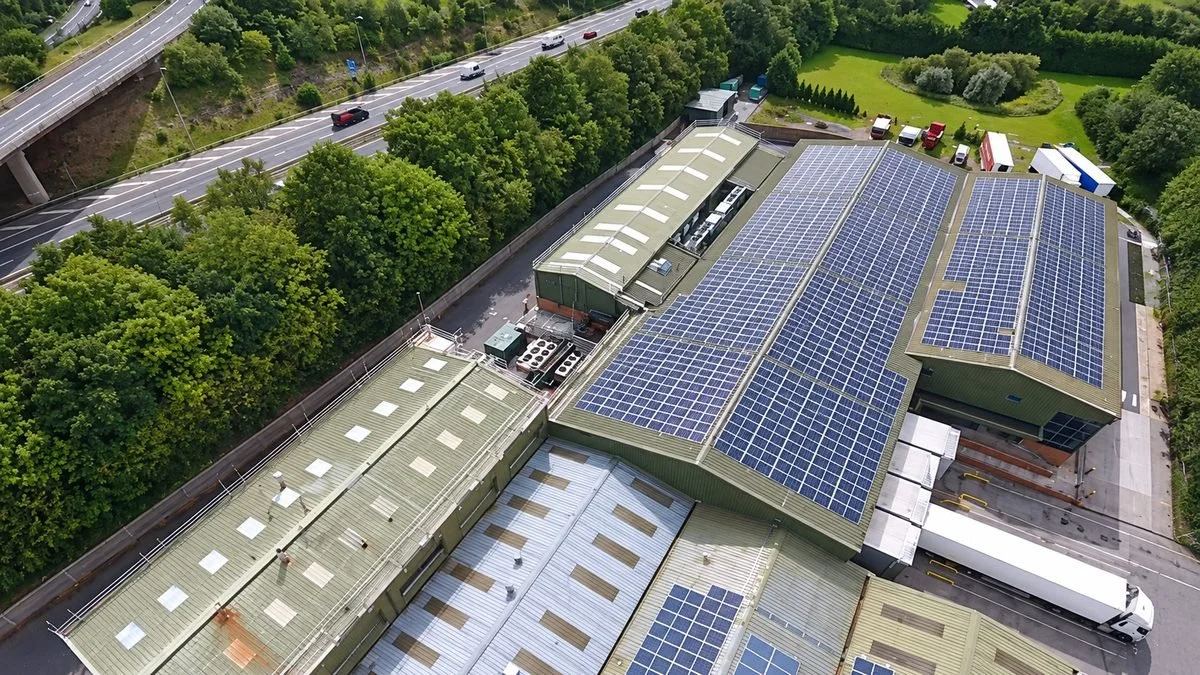
A high-energy manufacturing operation wanted to increase on-site renewable generation while reducing exposure to grid electricity costs and progressing its carbon-reduction and decarbonisation objectives.
The opportunity was substantial, but installing industrial-scale rooftop PV required more than simply maximising panel numbers. Roof geometry, pitch and orientation, structural capacity, shading, existing services, safe access and available electrical connection capacity all influenced the practical generation potential.
The generation also needed to integrate effectively with the site’s electrical demand. This required consideration of inverter configuration, electrical distribution, metering and monitoring so that renewable electricity could be used effectively on site and its performance verified. The project documentation confirms that the design work considered roof geometry, shading, system losses, planning, DNO approval and structural suitability before installationt.
At a glance
636 kWp Total PV capacity
~538 MWh/yr Renewable generation
~117 tCo2e/yr Carbon reduction
37% electrical cost reduction
Virium’s approach
Virium developed a targeted monitoring and submetering strategy around the site's significant energy and utility users, establishing benchmarks for both overall site performance and individual process areas.
Consumption was assessed against appropriate operational metrics, including production, allowing inefficient operation and unnecessary baseload to be distinguished from genuine increases in manufacturing demand.
The monitoring was then converted into practical operating actions. This included engagement with site personnel, development of operating and shutdown procedures, and continued monitoring to verify savings and identify performance drift.
Virium engineering evaluation
Demand and generation assessment
Site electricity demand was assessed alongside the available roof area to determine where renewable generation would provide the greatest practical value.
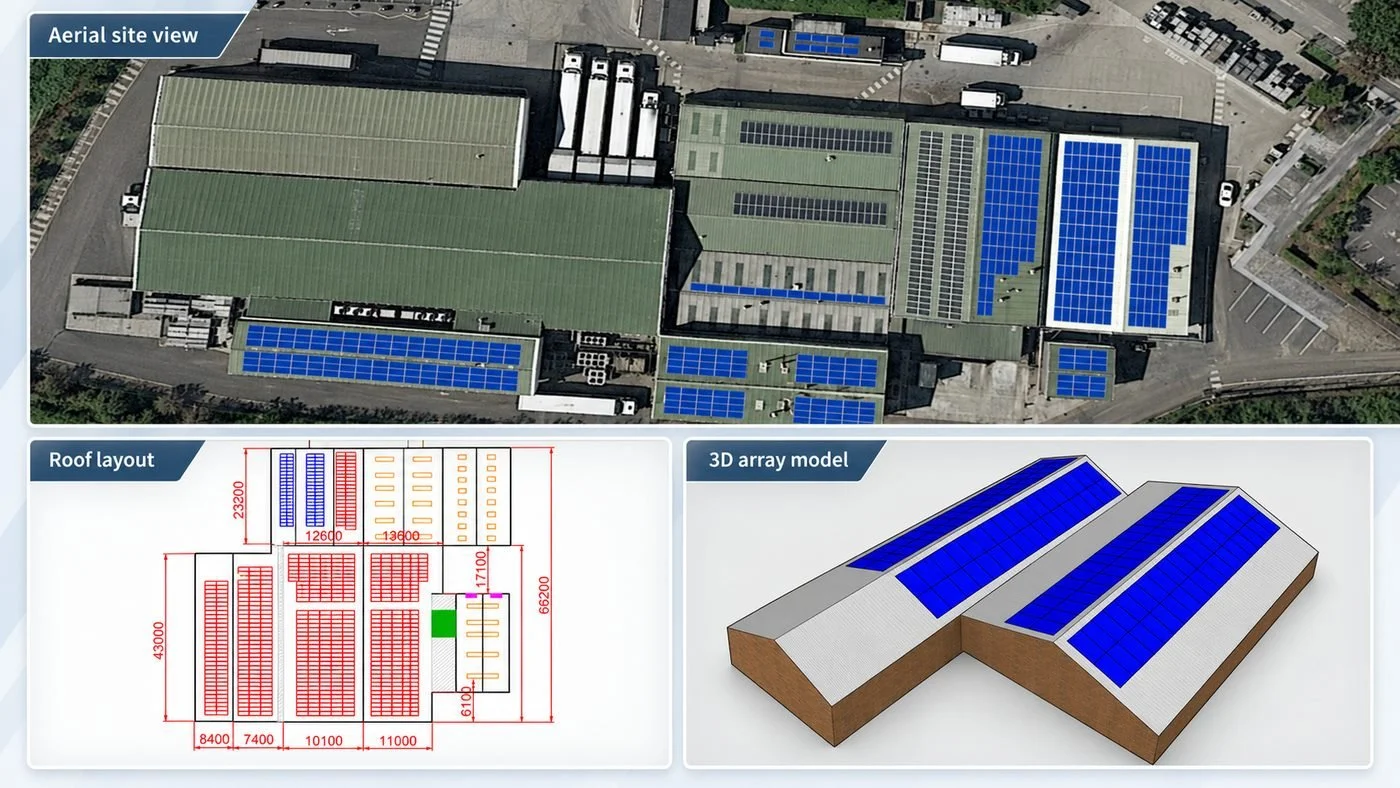
The roof geometry, pitch, orientation and usable areas were assessed and modelled, with shading and system losses incorporated into predicted generation performance. This established an engineering basis for PV sizing rather than simply filling available roof space with panels.
Roof, structural and PV array design
The proposed arrays were developed around the constraints of the existing industrial buildings.
Structural suitability formed a key design consideration. The later project documentation records that structural assessment identified one roof area as unsuitable and the array design was revised accordingly, demonstrating that installed capacity was governed by actual building constraints rather than theoretical roof area alone.
Panel layouts, mounting arrangements, cable routes and inverter requirements were then coordinated into the building and electrical infrastructure.
Planning and grid connection
The programme required coordination of the approvals necessary for commercial Solar PV generation.
This included planning considerations, structural verification and DNO connection applications to establish the generating capacity that could be connected safely to the local electrical network. Later project development included a G99 application as part of the grid-connection process.
Electrical integration, inverters and monitoring
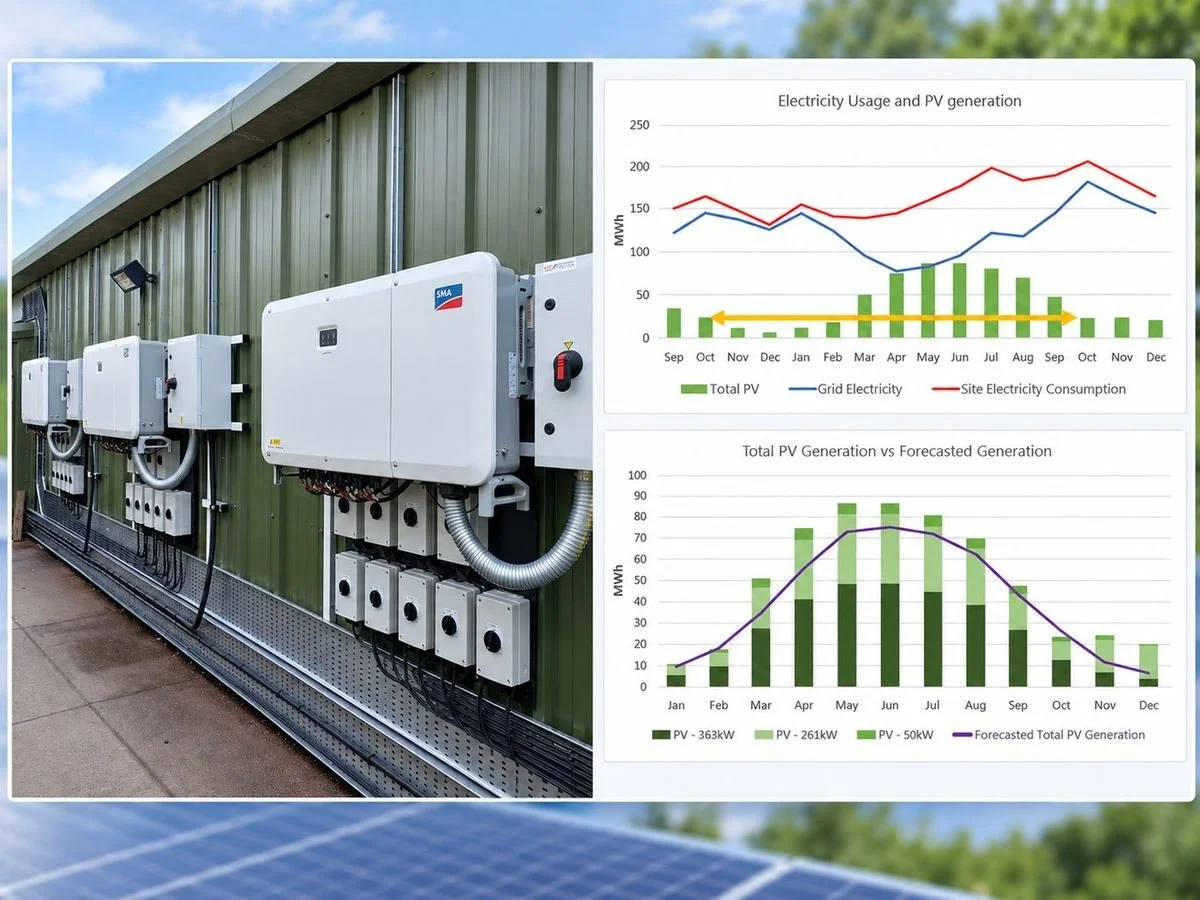
PV generation was integrated into the site electrical system through multiple inverters, isolation equipment and internal AC distribution.
The electrical arrangement was developed so that generated power could be consumed by site operations rather than treated as an isolated renewable asset. Inverter and generation monitoring provided visibility of system output and supported comparison between renewable generation and site electricity consumption.
Testing, commissioning and performance monitoring completed the installation, including electrical testing and witness testing of the generating system.
What Virium delivered
Virium's scope combines utility monitoring, engineering structural analysis, planning approvals and operational demands to convert production consumption data into reportable reductions.
Site electricity-demand assessment
Solar generation feasibility and modelling
Roof-area and shading assessment
Structural coordination
PV array development
Planning and statutory considerations
DNO / grid-connection coordination
Contractor and supplier coordination
Roof access and installation planning
Panel and mounting-system installation
Inverter and electrical integration
Internal electricity distribution
Metering and performance monitoring
Testing and commissioning
Handover and operational monitoring. The result was not simply additional renewable capacity. On-site generation reduced the quantity of electricity purchased from the grid, improved energy resilience and provided measurable generation data that could be incorporated into the site's wider energy and carbon management and business decarbonisation strategy.