PROJECT DELIVERY
RELATED SERVICE – SUSTAINABILITY
Industrial Effluent Treatment Plant (DAF)
The challenge
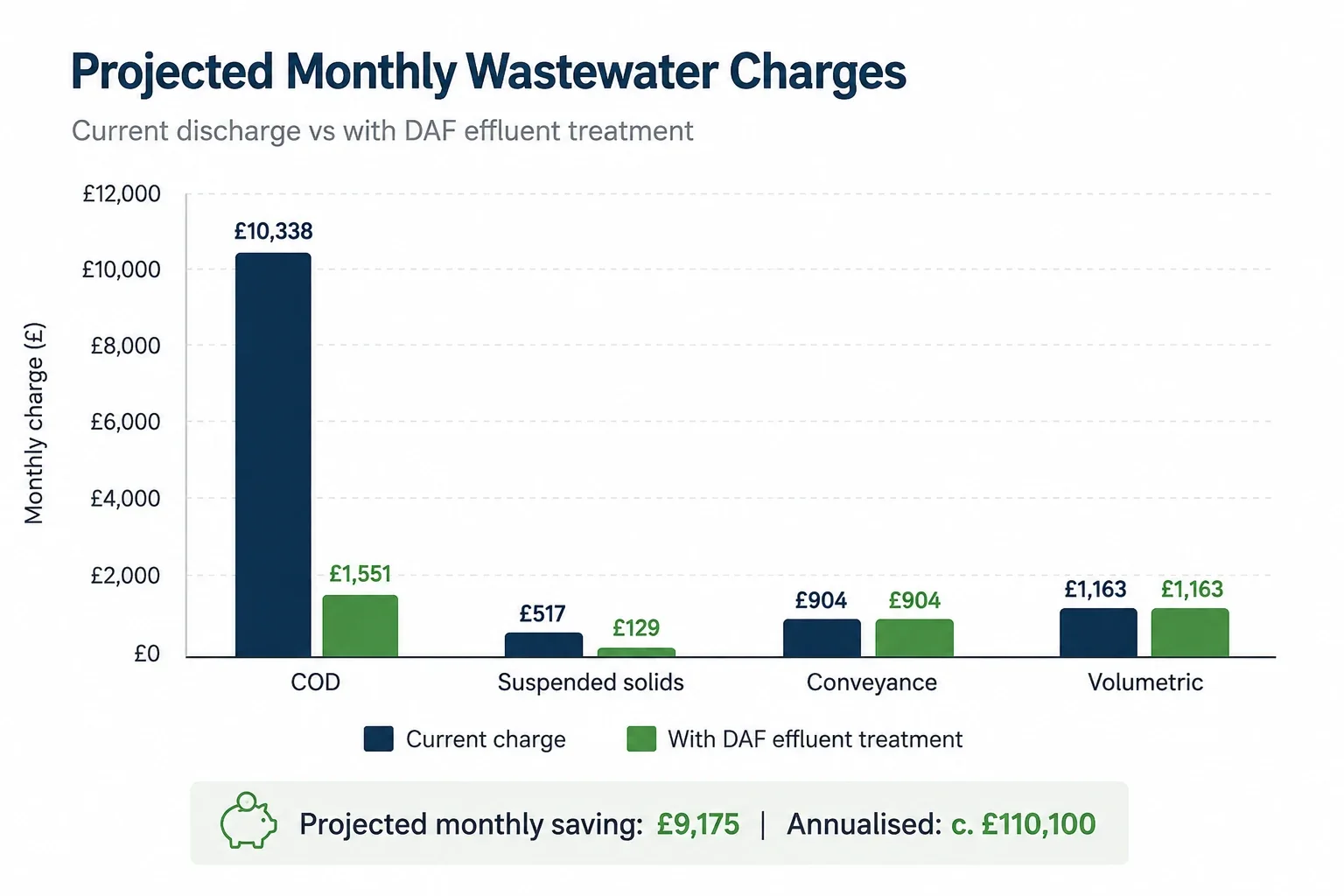
High strength food processing effluent was generating substantial sewer discharge costs, which was driven by chemical oxygen demand (COD), suspended solids and discharge volume.
A full-scale DAF trial demonstrated that the effluent could be treated effectively before discharge, creating a clear opportunity to reduce pollutant loading and operating cost.
At a glance
~95% COD reduction demonstrated in the trial
£100k+ Projected annual net saving
Current Stage Permanent treatment solution in engineering
Virium’s approach
Following the successful DAF trial, Virium is developing the permanent treatment solution and coordinating the engineering required to integrate it into the live production site.
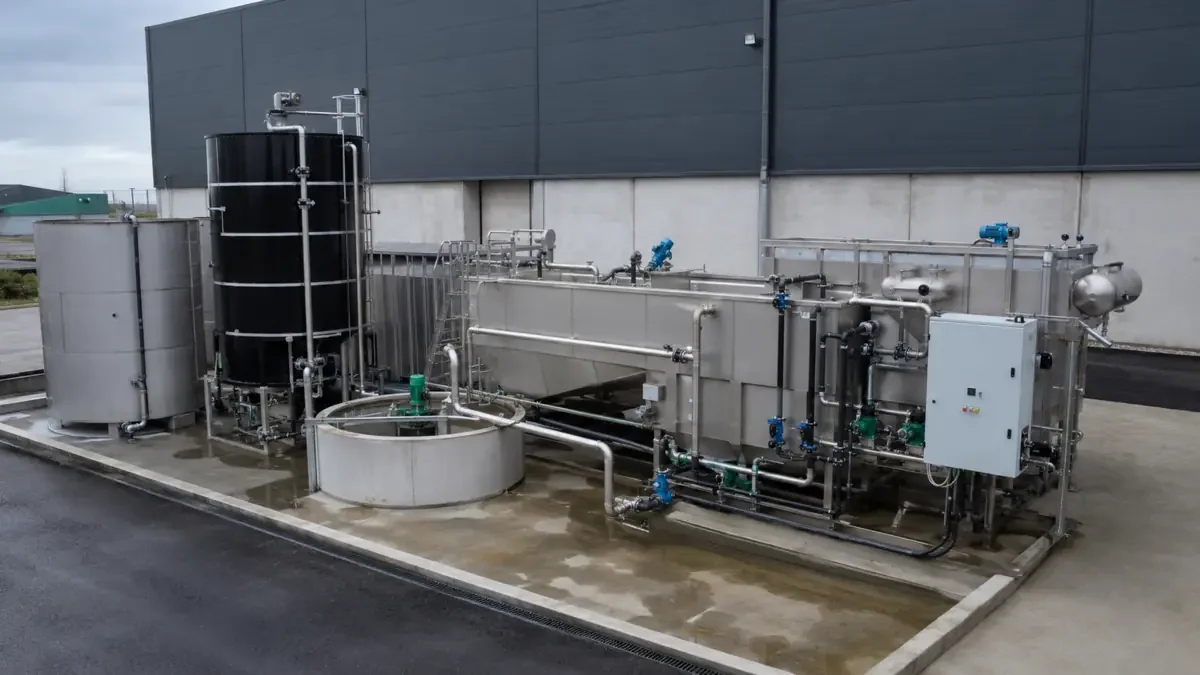
The proposed solution brings together flow balancing, DAF treatment, sludge management, treated-water routing and the associated mechanical, electrical and civil infrastructure.
The engineering is being developed around operational practicality, maintainability and the need to minimise disruption to production.
Project Status and next stage
The successful DAF trial established the technical basis for the permanent treatment solution. Virium is now progressing the engineering and site integration required to move from trial performance to an operational installation.
The project is being developed to improve control of effluent discharge, reduce pollutant loading and deliver a projected net annual saving in excess of £100,000.
Final performance will depend on the completed design, installation and operating conditions.
What Virium is delivering
Virium’s scope includes the engineering and coordination required to take the proven treatment concept through to a permanent site solution.
Flow balancing and buffer capacity
Permanent DAF treatment system
Sludge storage and removal arrangements
Treated-water routing and discharge strategy
Mechanical and electrical integration
Civil and drainage requirements
Coordination of installation within an operational food-production environment