PROJECT DELIVERY
RELATED SERVICE – INTERIM ENGINEERING
Combined Heat & Power engineering & delivery
The challenge
Energy intensive operations needed to reduce the cost of electricity and thermal energy while maintaining dependable supplies for production.
Introducing combined heat and power required more than selecting a generating unit. The installation had to suit the site’s electrical demand, make productive use of recovered heat and integrate with existing steam, hot-water and electrical systems.
The engineering challenge was to establish a commercially viable arrangement that matched operating requirements and could be delivered within an existing industrial facility.
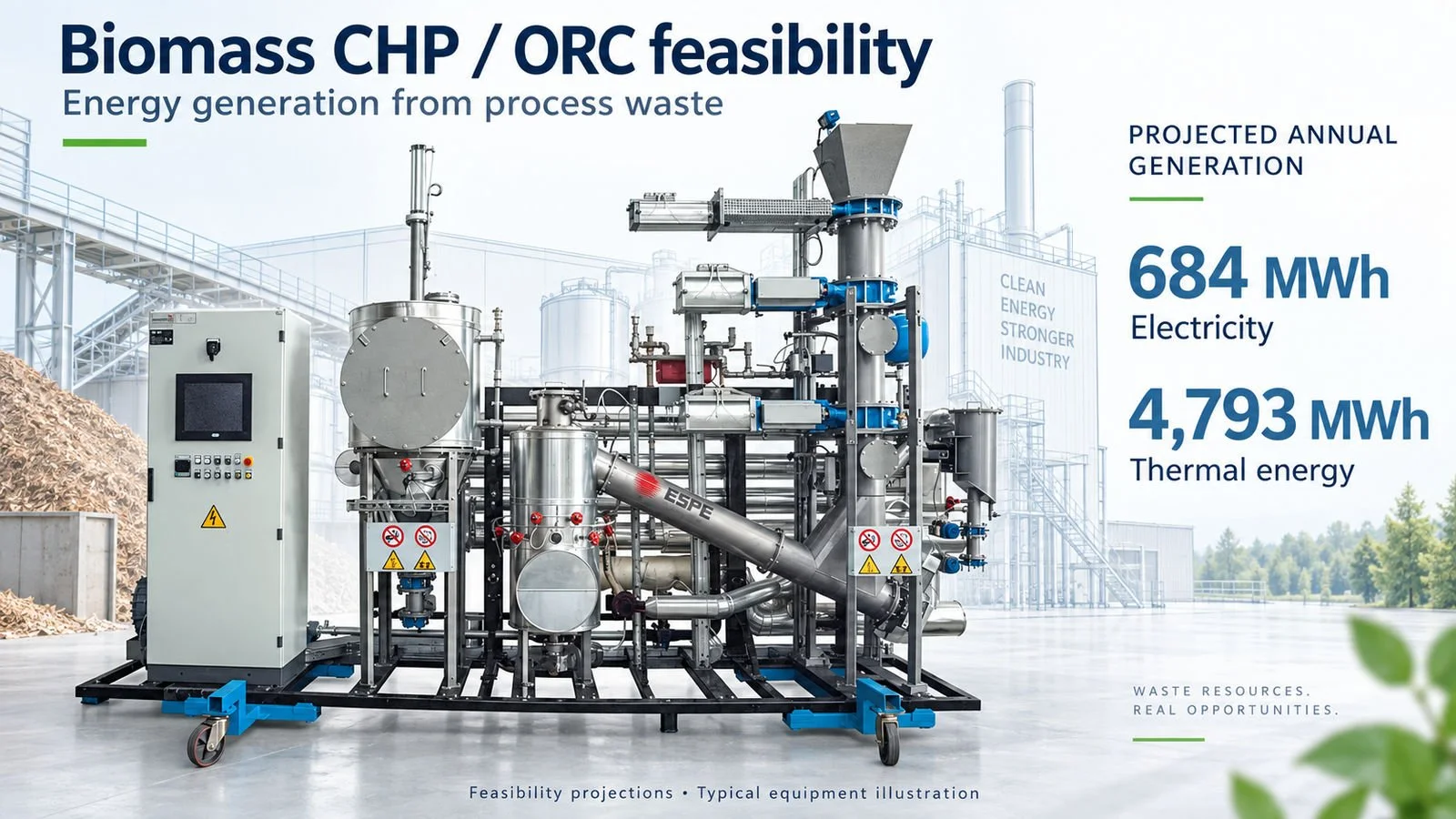
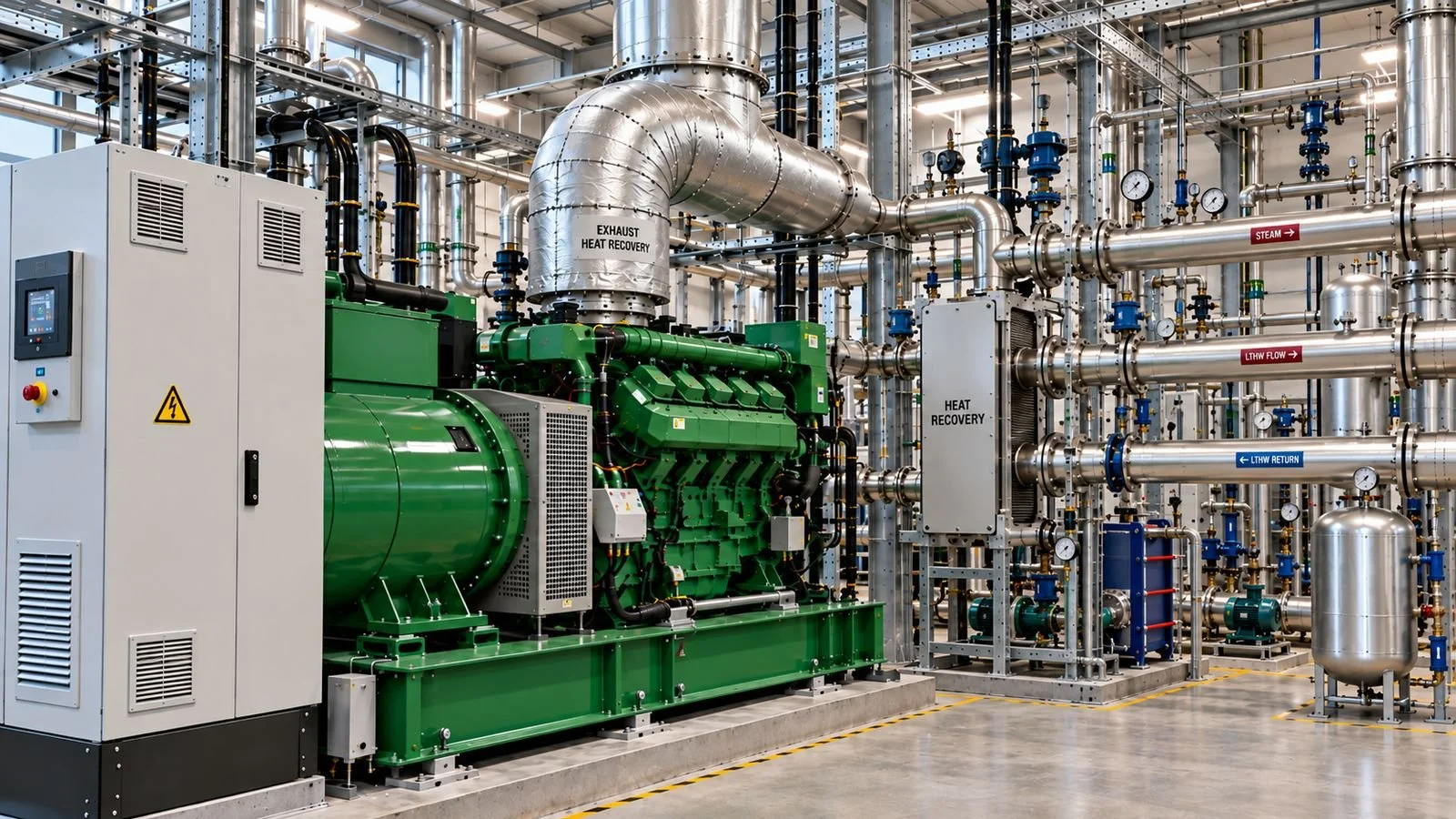
This case study brings together two separate projects: an installed 854 kWe CHP system and a feasibility study evaluating biomass CHP and Organic Rankine Cycle (ORC) generation using process waste.
At a glance
584 kWe Installed CHP electrical capacity
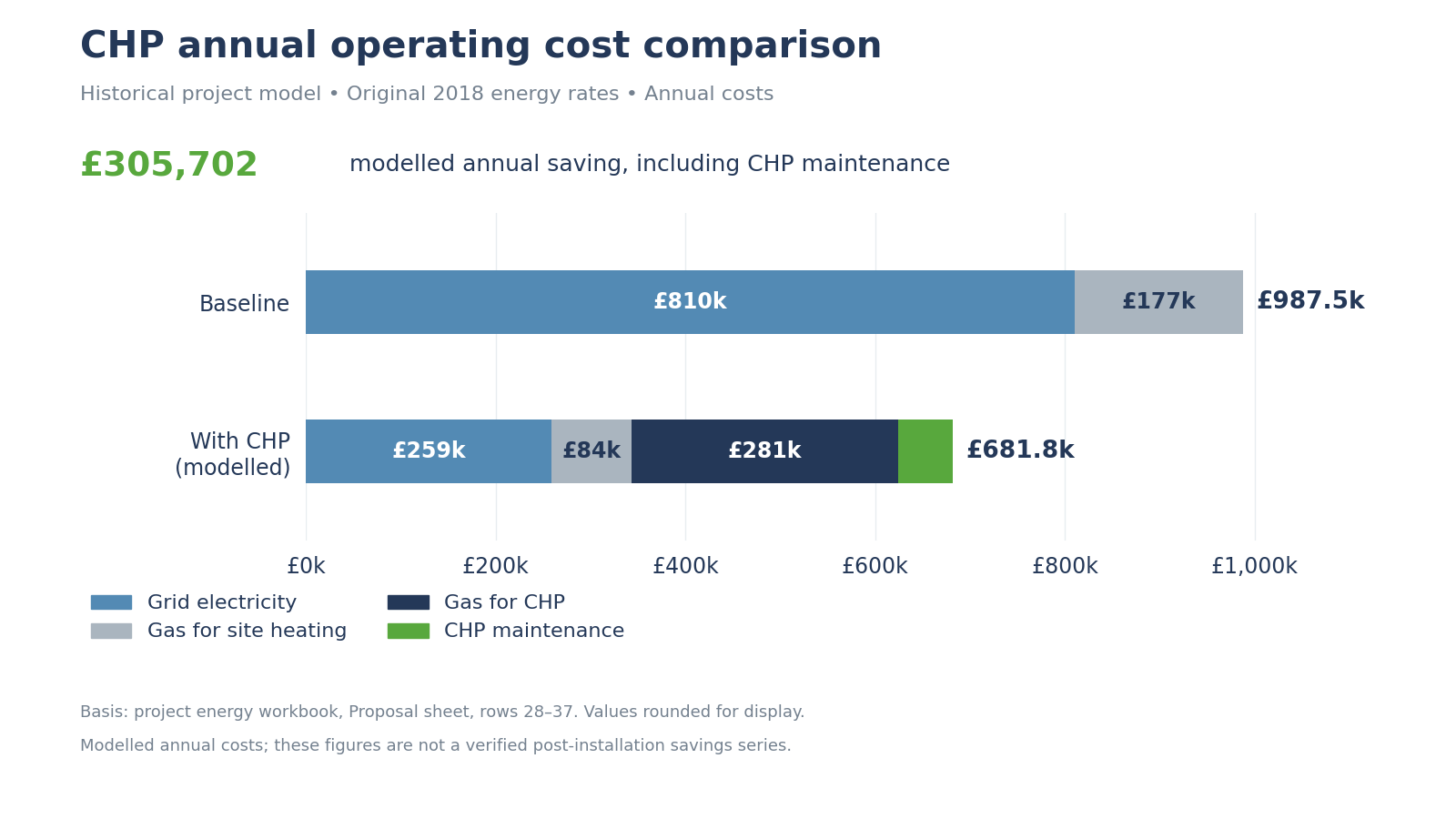
£300k+ Reported annual savings for the installed CHP
Engineering Scope Energy analysis, technical specification, supplier tendering and system integration
Engineering the Solution
The work started with site energy requirements and the practical constraints of integration. Engineering analysis informed equipment sizing, technical specifications and supplier selection, giving the client a defined basis for investment and delivery.
Site energy assessment
Site evaluation and analysis of building management system and electrical data established the operating context for CHP. The assessment considered electricity consumption alongside thermal demand to identify how on-site generation and recovered heat could serve production.
CHP sizing and technical specification
The engineering work developed the technical requirements for an 854 kWe CHP installation. Capacity selection considered the relationship between electrical generation, useful heat recovery and the site’s operating requirements.
The specification provided a common basis for suppliers to propose equipment and define their installation scope.
Supplier tendering and evaluation
Turnkey supplier tendering translated the engineering requirements into proposals for delivery. Technical evaluation considered the proposed equipment, integration requirements and scope alongside the commercial offer.
This connected the investment decision to what the supplier would actually provide and how the installation would operate within the facility.
Integration with existing utilities
System integration addressed the interfaces between CHP generation and the site’s electrical, steam and low-temperature hot-water services.
The engineering focus extended beyond the CHP package to how generated electricity and recovered heat would be used within the existing operation.
Separate biomass CHP and ORC study
A second industrial project evaluated opportunities to use process waste within biomass CHP and ORC generation arrangements.
This work remained at feasibility and engineering assessment stage. It examined generation options, site integration and the investment case; it is presented separately from the completed 854 kWe installation.
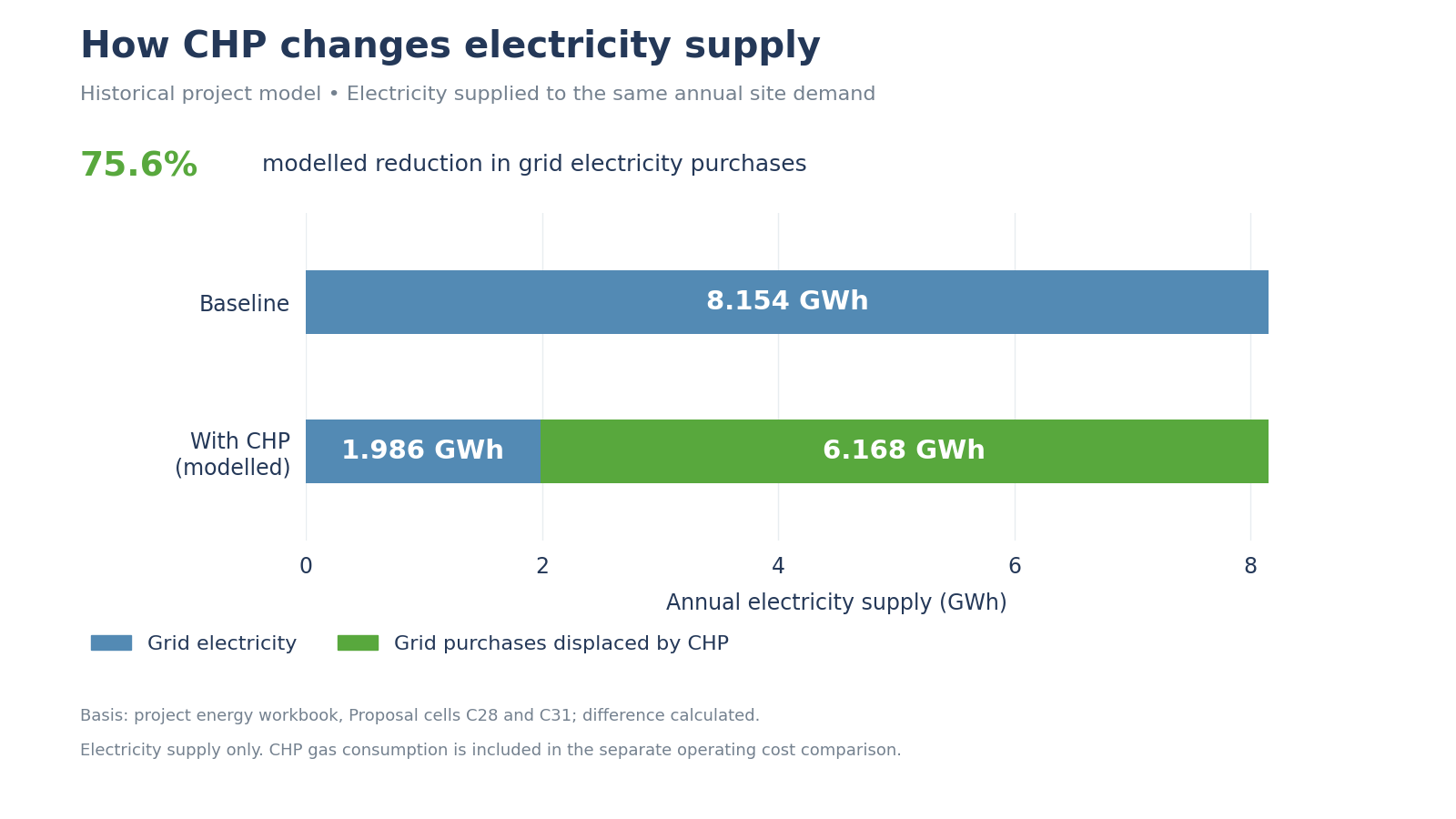
Measured results for operational and business performance
The completed project materially reduced the amount of energy required to generate compressed air while maintaining the production and equipment functions required by the site.
The combined engineering interventions delivered a 61% reduction in energy associated with compressed-air generation, producing annual financial savings of approximately £25,350 and reducing carbon emissions by around 38 tCO₂e per year.
The resulting simple payback was approximately 1.1 years.
Most importantly from a business perspective, reducing system demand also avoided the need to add further compressor capacity to meet production requirements
Project delivering
The installed CHP project progressed from site evaluation and energy analysis through technical specification, turnkey supplier tendering and system integration, resulting in an 854 kWe installation.
Engineering leadership connected the client’s operating requirements with the supplier’s proposed solution. This provided continuity between the initial energy opportunity, the investment decision and delivery of the generating plant.
The separate biomass CHP and ORC study provided an engineering and commercial basis for assessing a further generation opportunity. Its outcome was a feasibility assessment, with projected benefits dependent on the selected configuration and subsequent implementation.
Together, these projects demonstrate the engineering experience behind Virium’s Project Delivery and Interim Engineering services: assessing opportunities, defining workable projects and supporting clients through investment and implementation.