
PROJECT DELIVERY
RELATED SERVICE – BUSINESS PERFORMANCE
Compressed Air & Blower System Optimisation
The challenge
A site relied heavily on compressed air for pneumatic equipment, electrical cabinet cooling, process duties and product handling.
Monitoring showed a persistent compressed-air baseload during non-production periods and identified several applications where high-pressure compressed air was being used unnecessarily. The system also had opportunities to improve compressor sequencing, operating pressure and overall control.
The challenge was to reduce energy demand without compromising production, equipment cooling or process reliability.
The original monitoring identified a non-production baseload of approximately 14.6 kW, while the system operated at around 7.5 bar.
At a glance
61% Reduction in compressed air generation energy
£25,350 Annual financial saving
1.1 years Simple payback
38 tCO2e Annual carbon reduction
Engineering the Solution
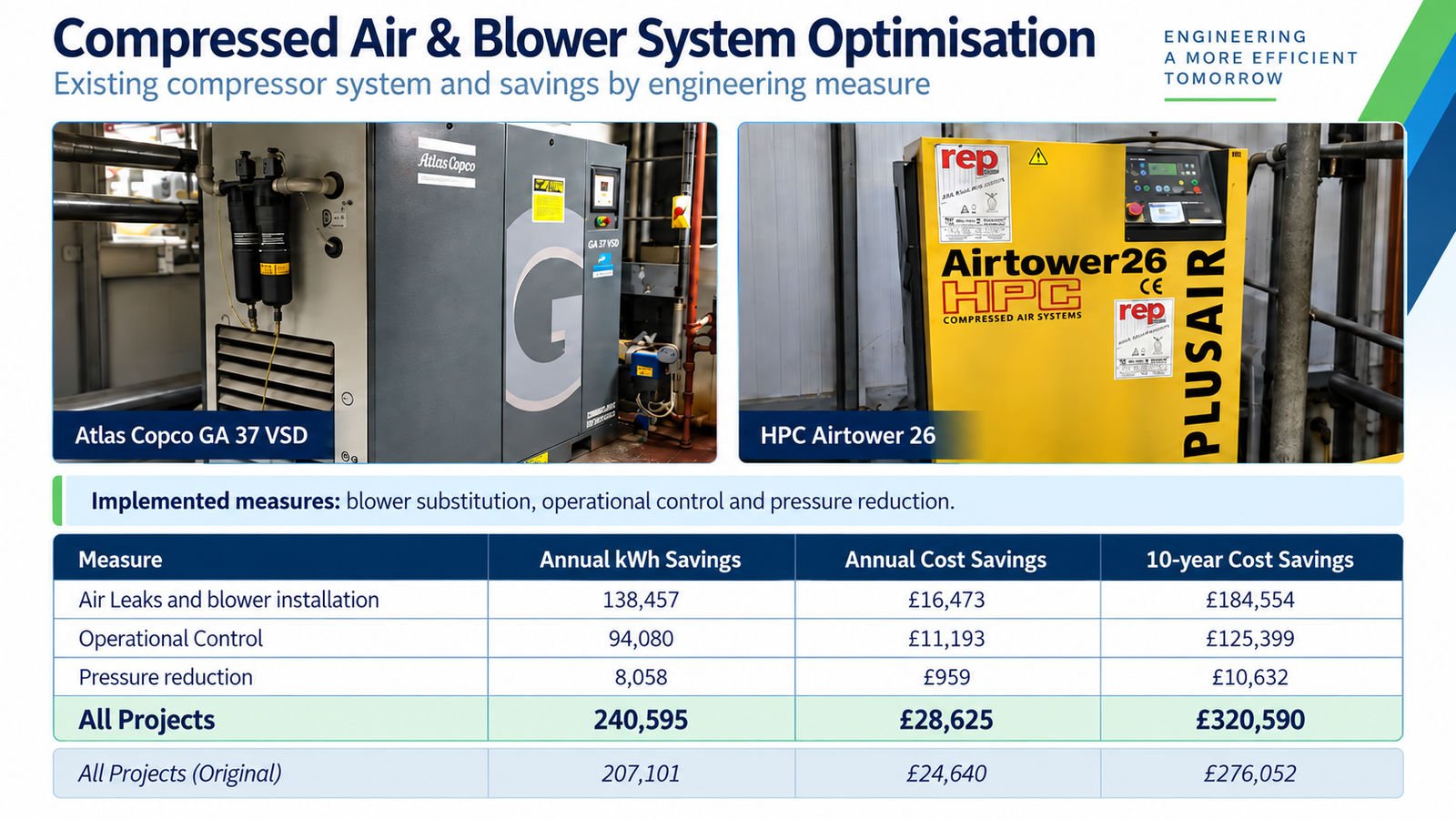
Rather than treating the compressors in isolation, the project used a bottom-up engineering approach: first reducing demand at the point of use, then optimising how the remaining compressed-air requirement was generated and controlled.
The engineering programme combined demand assessment, alternative equipment design, control modifications and staged implementation across the live manufacturing facility.
Point-of-use assessment
Compressed-air users were reviewed against their actual functional requirements to identify where demand could be reduced or replaced with a more efficient air supply.
Blower system design and installation
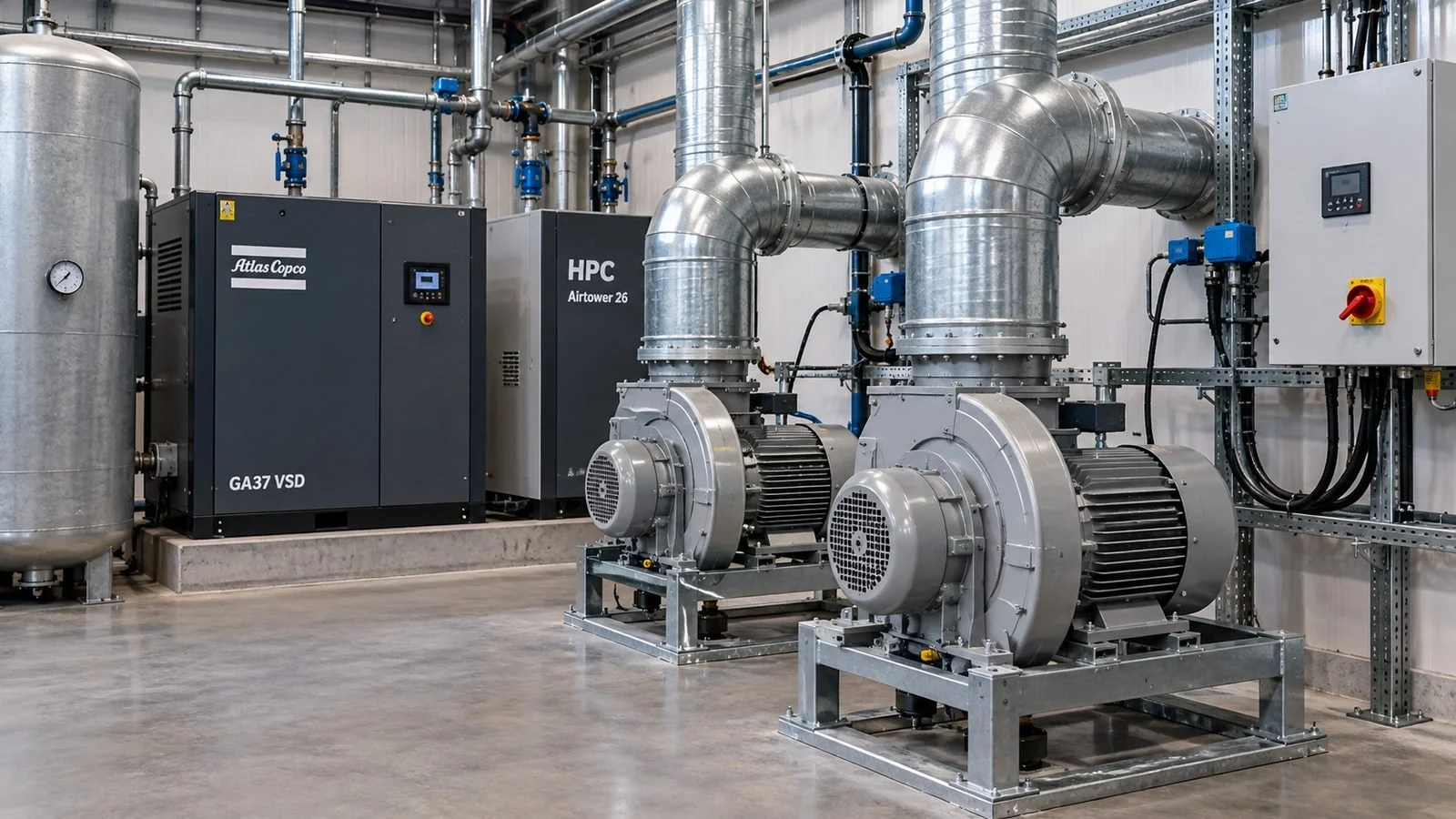
Compressed air used for electrical cabinet cooling and process duties was replaced with dedicated lower-energy blowers. Blower operation was integrated with temperature sensors and production requirements so air was provided only when required.
Compressor control optimisation
Existing compressor controls were reviewed and modified using timers, sequencing and distribution control to better match compressor operation to production demand.
Pressure optimisation
Following demand reduction and blower installation, system pressure was progressively reduced and monitored against equipment performance to minimise compressor energy consumption without affecting production.
The contract specifically included blower installation, temperature-based control, compressor timers/sequencing, pressure reduction and monitoring.
Measured results for operational and business performance
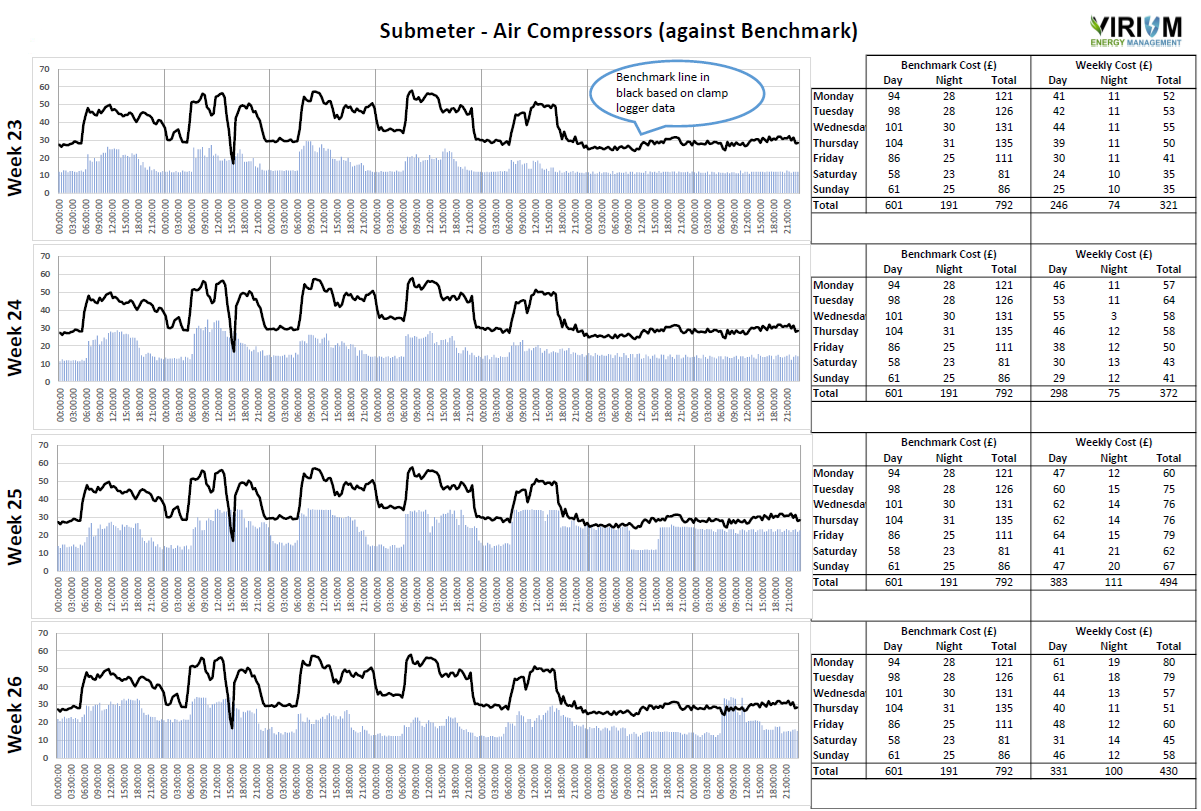
The completed project materially reduced the amount of energy required to generate compressed air while maintaining the production and equipment functions required by the site.
The combined engineering interventions delivered a 61% reduction in energy associated with compressed-air generation, producing annual financial savings of approximately £25,350 and reducing carbon emissions by around 38 tCO₂e per year.
The resulting simple payback was approximately 1.1 years.
Most importantly from a business perspective, reducing system demand also avoided the need to add further compressor capacity to meet production requirements
Project delivering
The work progressed from baseline monitoring and engineering assessment through equipment selection, installation, controls integration and commissioning.
The initial blower solution was subsequently expanded to support additional production equipment, with further blowers incorporated for new pasteuriser and CIP-related cooling duties.
The system was then monitored following implementation to confirm operating performance and verify the reduction in compressed-air demand.
The revised project scope added further blower installations for new production equipment and included design, installation and commissioning activities.
Energy and compressor data logging
Point-of-use demand assessment
Air-leak identification and rectification
Blower sizing and equipment selection
Temperature-controlled blower integration
Compressor timer and sequencing modifications
Operating-pressure optimisation
Installation and commissioning
Post-project metering and performance verification